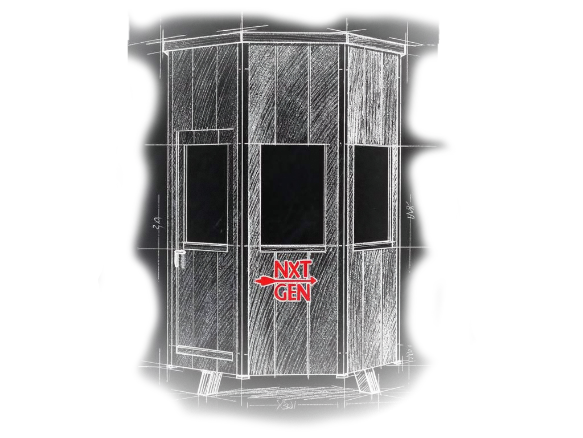
5 Foot
You.
- Sides8
- Windows8
- Interior width58.5 in
- Visibility360°
- Ceiling7 ft
From $2,280Ships flat-rate, or pick one up
The 5 Foot

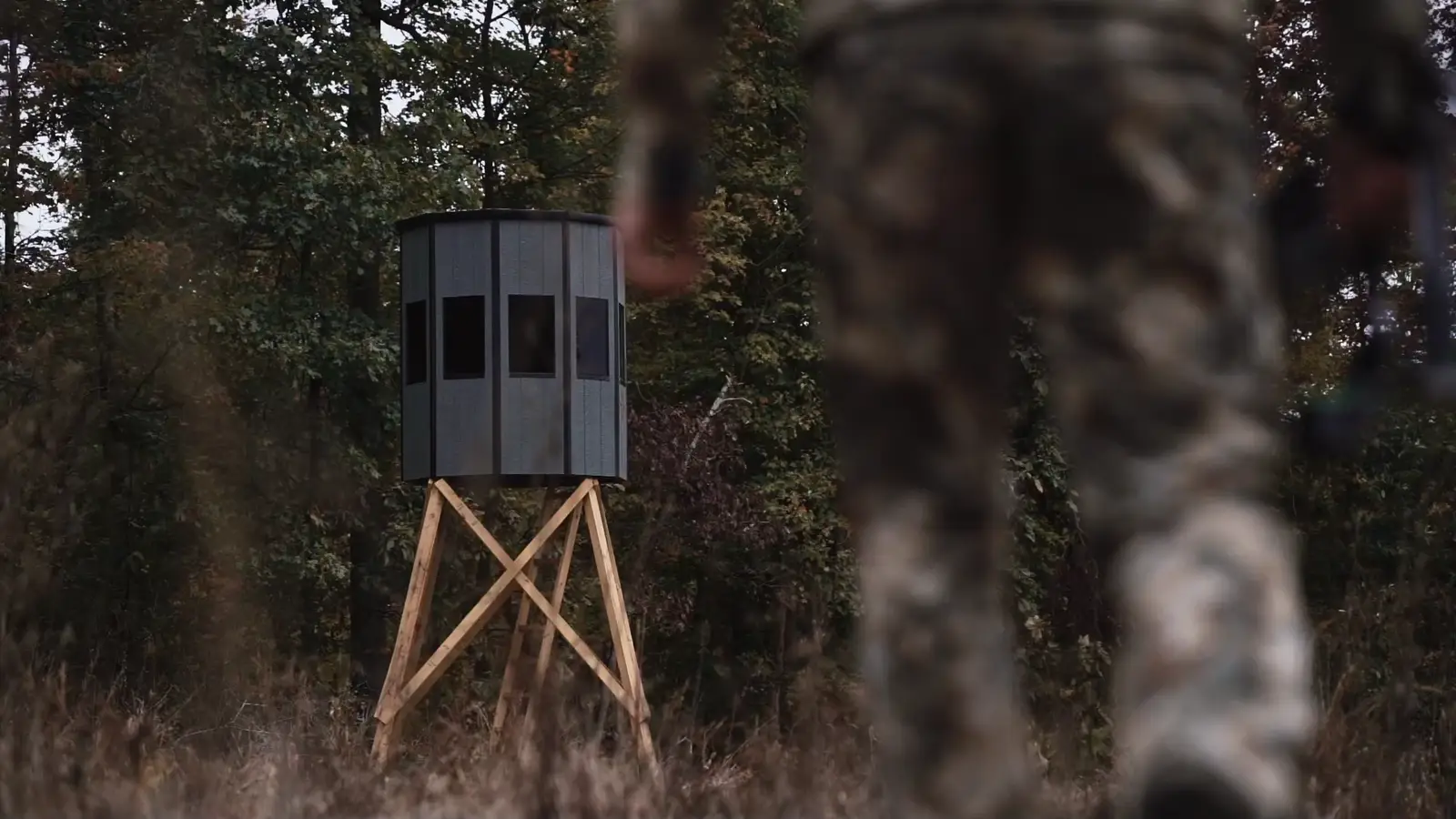
A window in every panel. A full seven-foot ceiling. Ten sides of glass and nothing behind you but more glass.
A box blind has four walls. Three of them are behind you. A window in every panel means 360-degree visibility and no blind spots to hide behind.
Red lines are windows. The cones represent your visibility and shooting lanes from the center of the blind.
Seated eye height, looking around the inside of a 6 Foot. Drag it. This is the view you will spend eleven hours with.
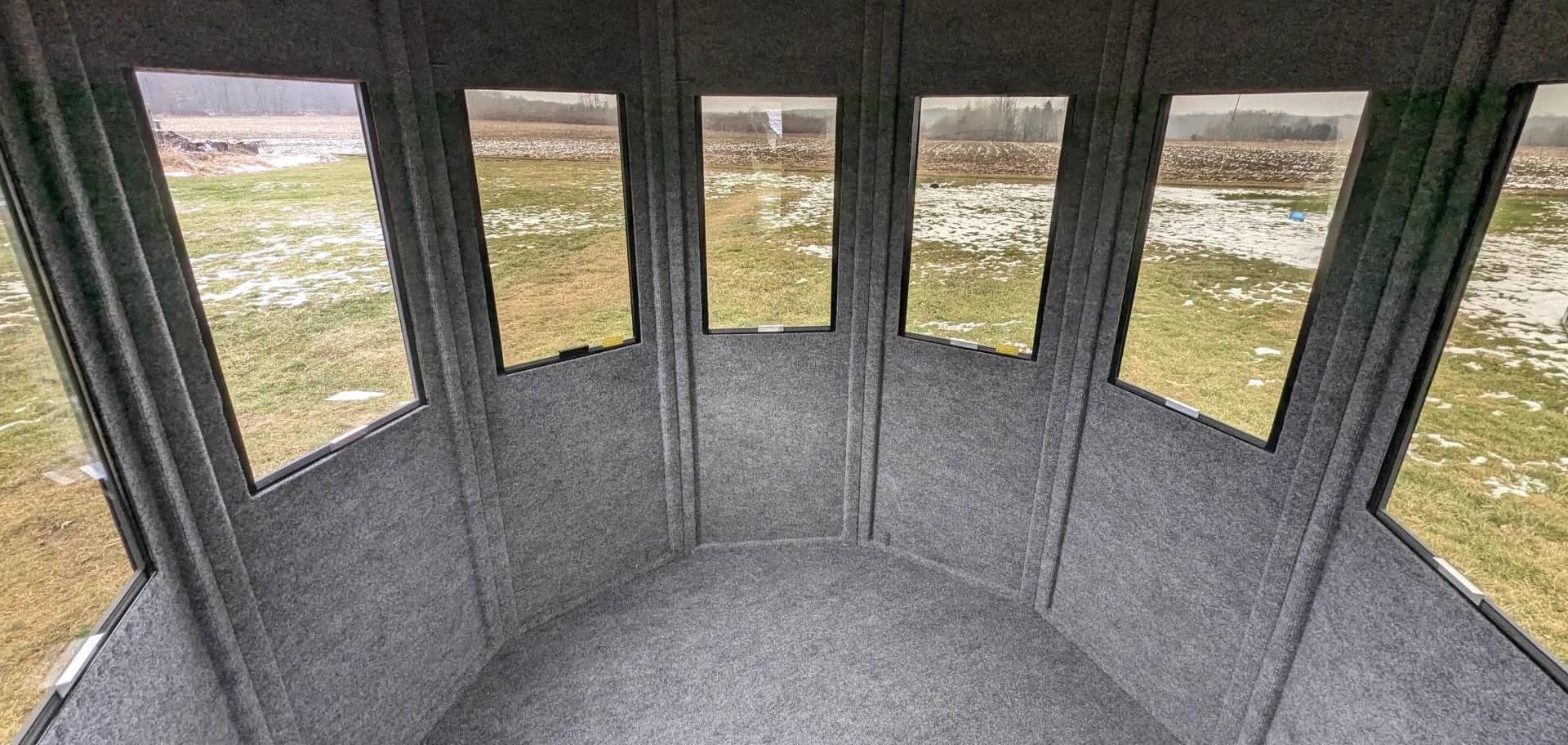
Fully carpeted interior. It kills the sound of a sleeve on a wall and it holds scent down.
Quiet vertical slide, tinted glass. No hinge to squeal at the wrong second.
Insulated, under a PVC commercial roof membrane. Stand up in it.
None of this is a marketing adjective. It is all a number you can put a tape on.
Every size. Stand up, come to full draw, and let it go without ducking.
Same window in every single panel — including the one behind your left shoulder.
A window in every single panel means there is no back wall to hide behind.
In the 6 Foot. 58.5 in the 5 Foot, 93 in the 7 Foot. Wall to wall, not outside dimension.
Insulated roof deck under a durable PVC commercial roof membrane. The same stuff that goes on a flat commercial roof, because that is what a blind roof is.
Floor and walls. Quiet under boots, quiet under an elbow, and it takes the edge off a cold morning before the heater ever comes on.
You see out. The inside of the blind stays a dark hole from the field side, even with the sun behind you.
Heavy-duty construction and premium materials, sized for a blind that gets left on a hill through a Pennsylvania winter.
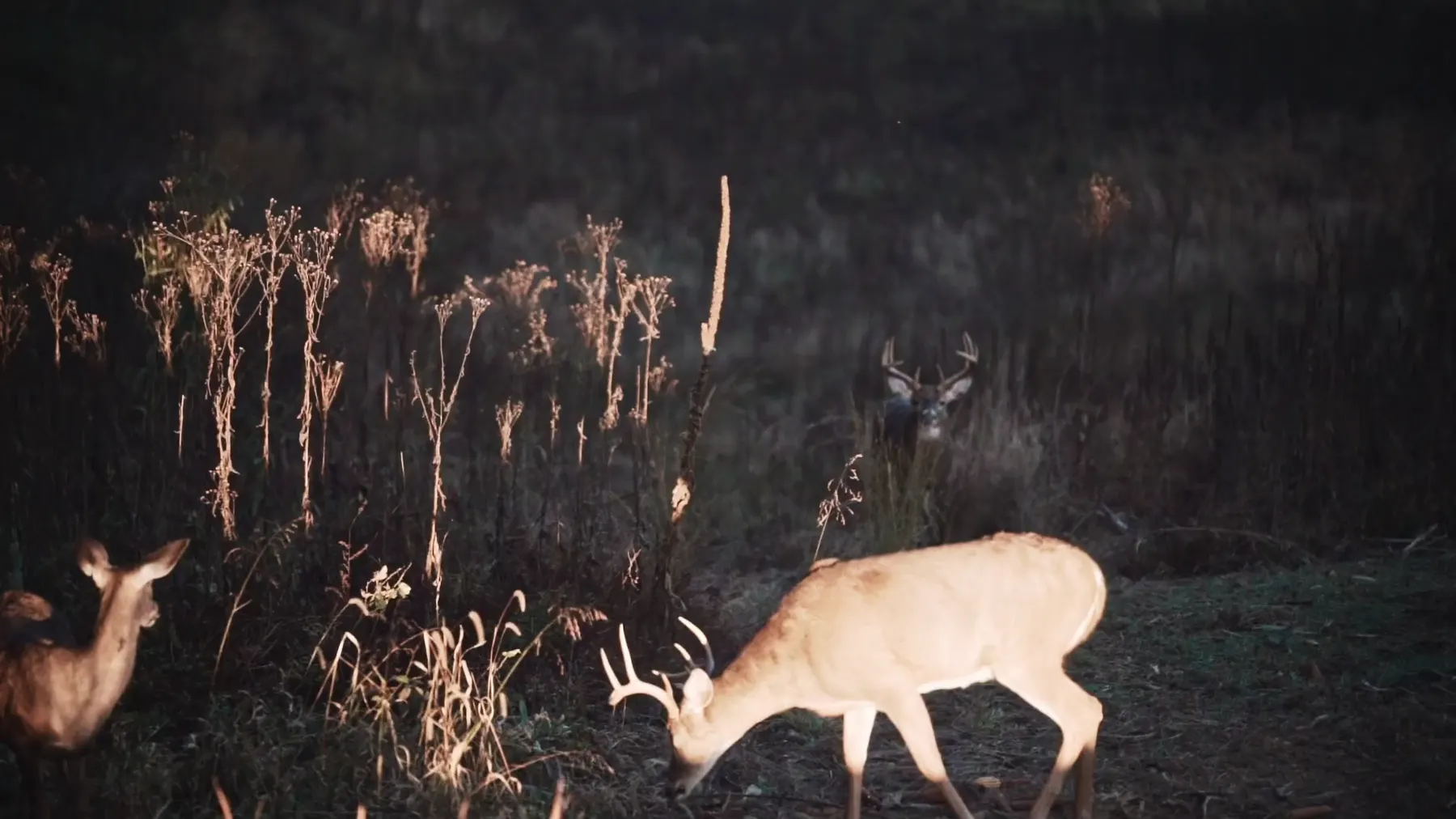
Warm feet and a quiet window are not luxury features. They are the reason you are still there at 4:40 when he finally steps out. The best blind is not the one you shoot from. It is the one you don't leave.
That is genuinely the only question. Every size gets the same seven-foot ceiling, the same window in every panel, the same carpet and the same roof.
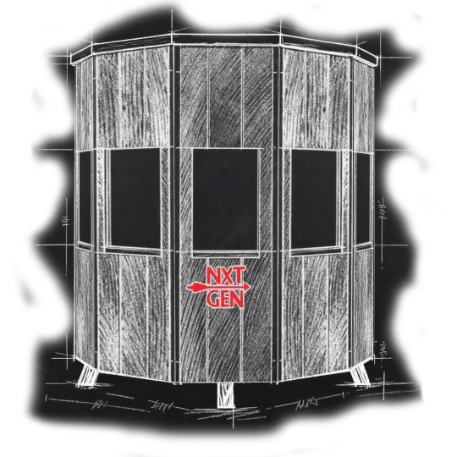
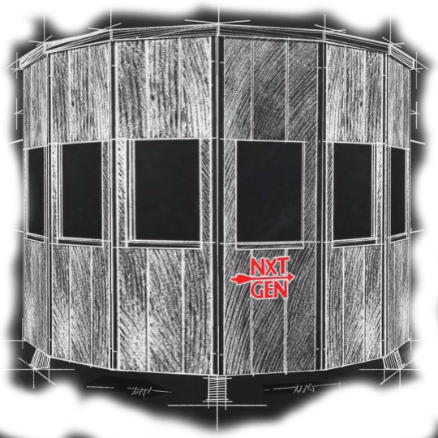
Classic and Deluxe share the exact same core design, including the same panels, ceiling, roof, and a fully carpeted interior. The Deluxe upgrades to insulated walls and a better, quieter, double-pane window system. This means the Deluxe stays warmer in the winter, the windows won't fog as easily, and it is significantly quieter—especially helpful if you have kids in the blind. The full difference.
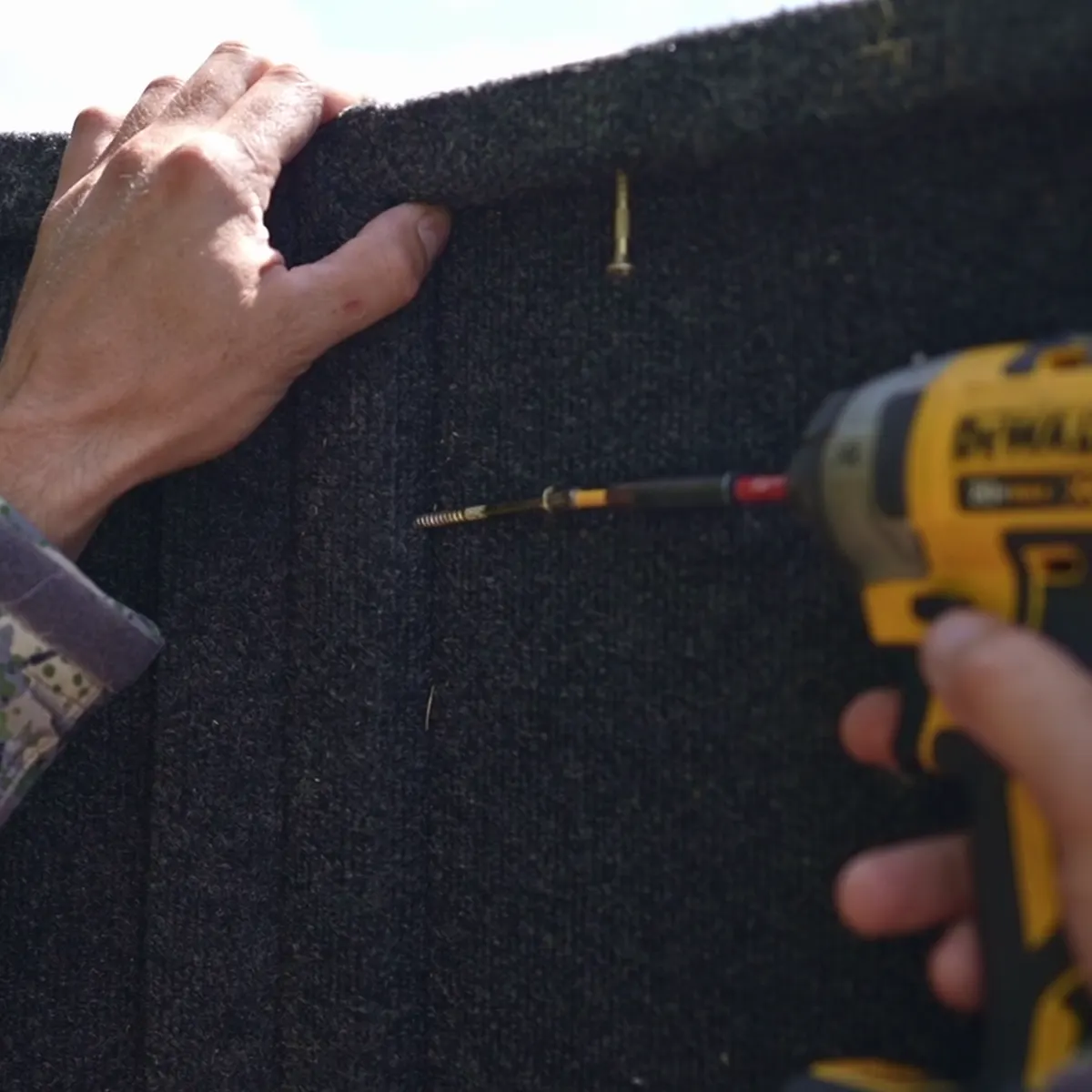
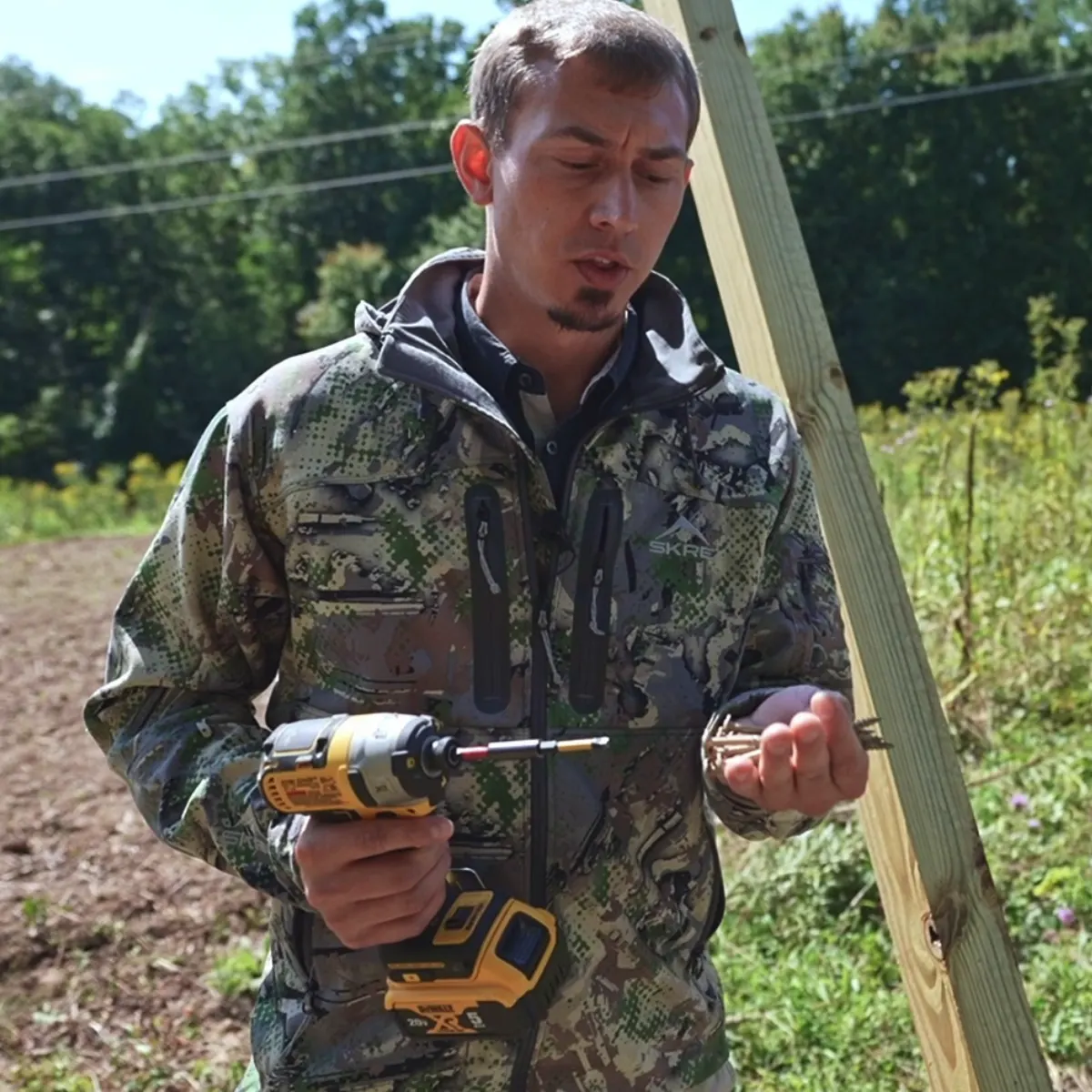
It ships as flat panels with the screws already started and the post pockets already cut. Two people, an impact driver, and a socket set. That is the tool list.
Post pockets are pre-cut into the floor frame. The legs drop in and get squared and levelled from the ground.
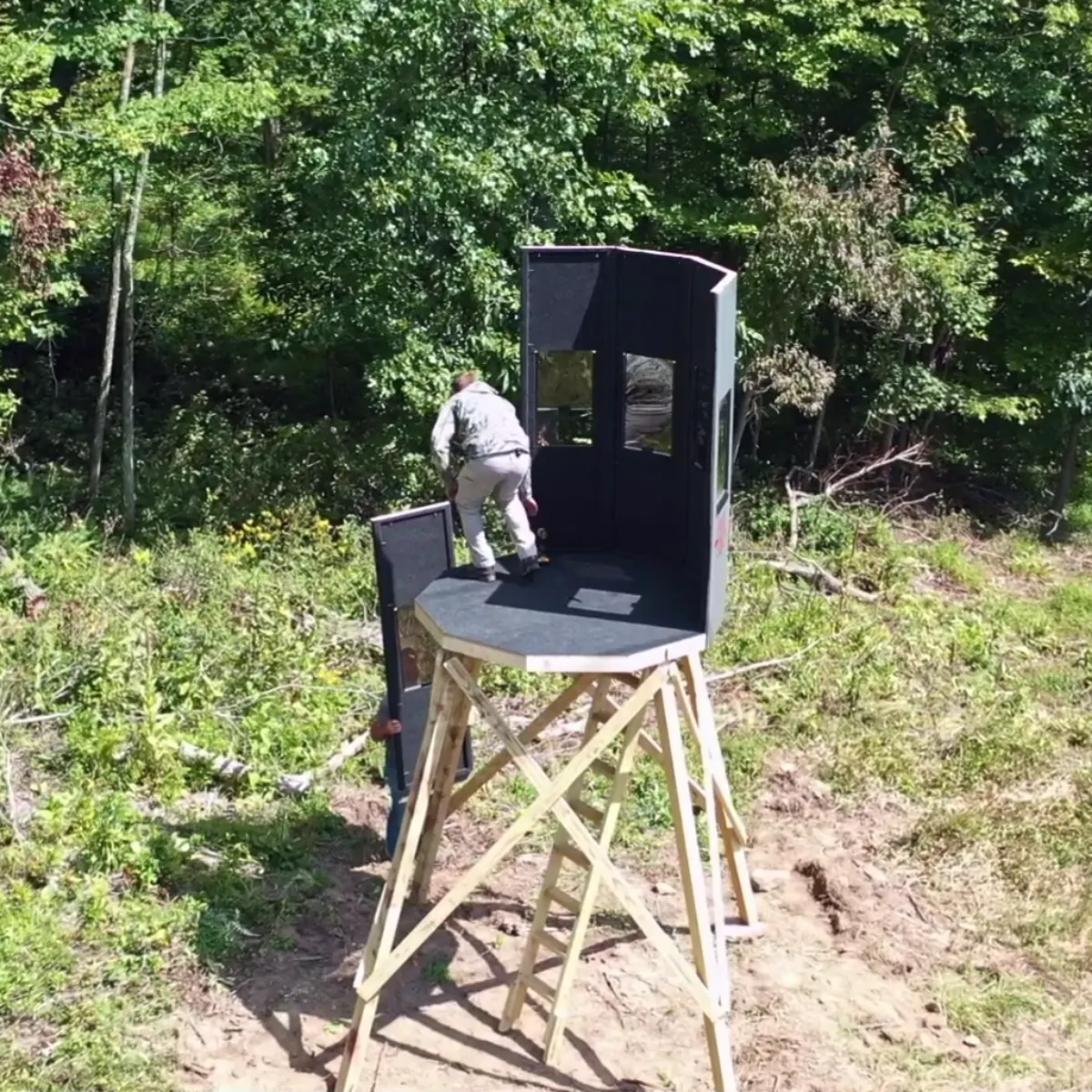
Panels go up one at a time around the floor. Every screw is pre-started, so nothing has to be found or hunted for on a hillside.
Roof on, ladder up, door hung. The rest of the afternoon is yours.
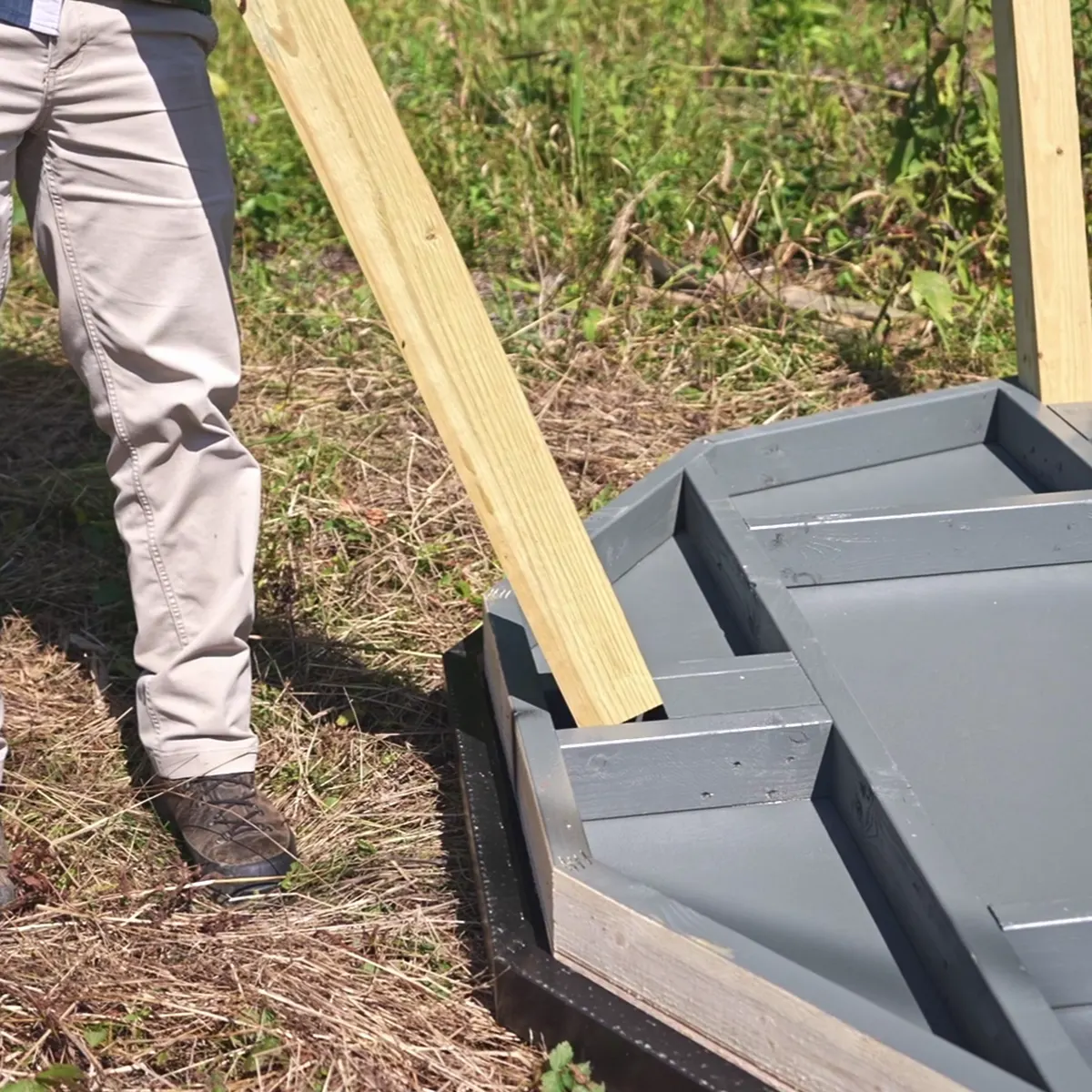
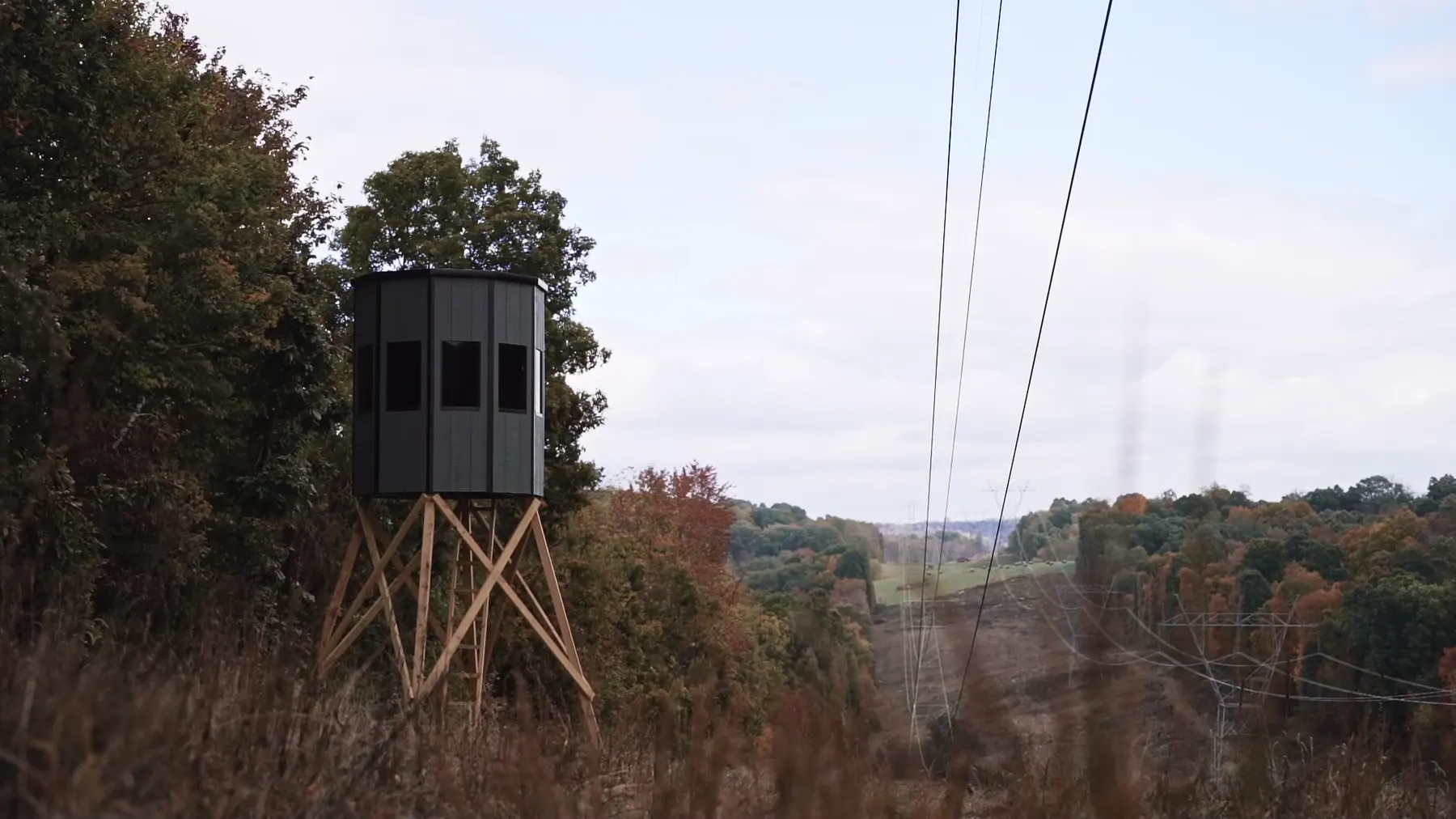
Height is a decision about wind and sight lines, not a spec sheet contest. We build the tower to match the blind, and we will tell you when you don't need one.
Everything on this page is a number until you are inside it with a bow in your hand. Find the closest place you can do that.
Lot stock moves fast in September. Ask what is physically standing, whether they have a Classic and a Deluxe up next to each other, and whether they will run it out and set the tower for you.
Flat. Anywhere in the lower 48. That is the whole number — not a starting number, not a residential surcharge, not a list of states in small type.
5 Foot and 6 Foot kits. The 7 Foot is too wide for the truck, so that one comes through a dealer who can deliver and set it.
We did not set out to start a blind company. We set out to stop being cold, stop being cramped, and stop turning around inside a box to find a window on the wrong wall.
Every one of these is built at the shop on Sandy Lake Greenville Road in Stoneboro, Pennsylvania. We haul most of them ourselves. If you call the number at the top of this page, you are going to get one of us.